
Best Skype Alternatives in 2026: What Actually Replaces Skype Out
Skype's own rate pages now redirect to Teams or a login wall. Here is what actually replaces Skype Out for calling real phone numbers, checked against live pages in September 2026.

Skype's consumer service closed in May 2025. If you only ever used it to video chat with other Skype users, that's an easy gap to fill, and WhatsApp, FaceTime, Google Meet and Zoom will all do it for nothing. If you used Skype to dial an actual phone number, though, a bank in Milan, your mother's landline in Manila, an embassy switchboard that keeps you on hold for twenty minutes, the replacement is much harder to pick, and Microsoft Teams is emphatically not it.
That second job had a name. Skype Out, the paid calls to real phone numbers, is the thing most people are actually trying to replace, and CallTuv is the closest like-for-like swap for it: pay as you go, no subscription, dial any number in 232 destinations from a browser tab or the iOS and Android apps.
Below is what the realistic options look like today, checked against each provider's own published pages on 9 September 2026 and screenshotted so you can see the source.
Skype's own prices are gone, so ignore any table that quotes them
Worth knowing before you read anyone else's comparison.
Go to skype.com/en/international-calls/united-kingdom/, which is where Skype published its United Kingdom calling rates for years, and you land on a Microsoft Teams meetings page. No rates. No phone numbers. A button to start a video meeting.
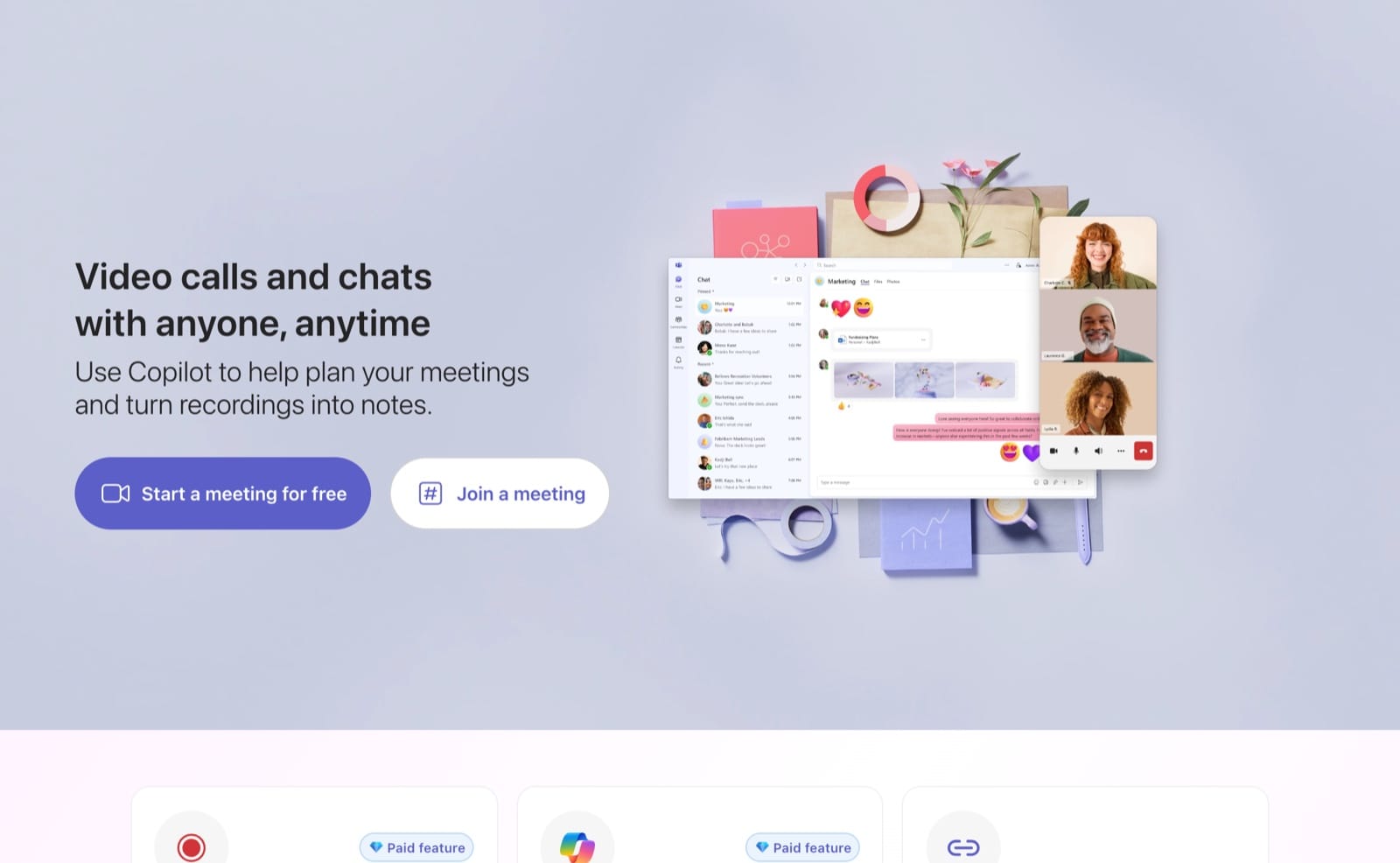
skype.com/en/international-calls/united-kingdom/ serves today.One address does survive. secure.skype.com/en/calling-rates still resolves, but it resolves to a Microsoft sign-in wall, and you cannot see a single rate without an account.
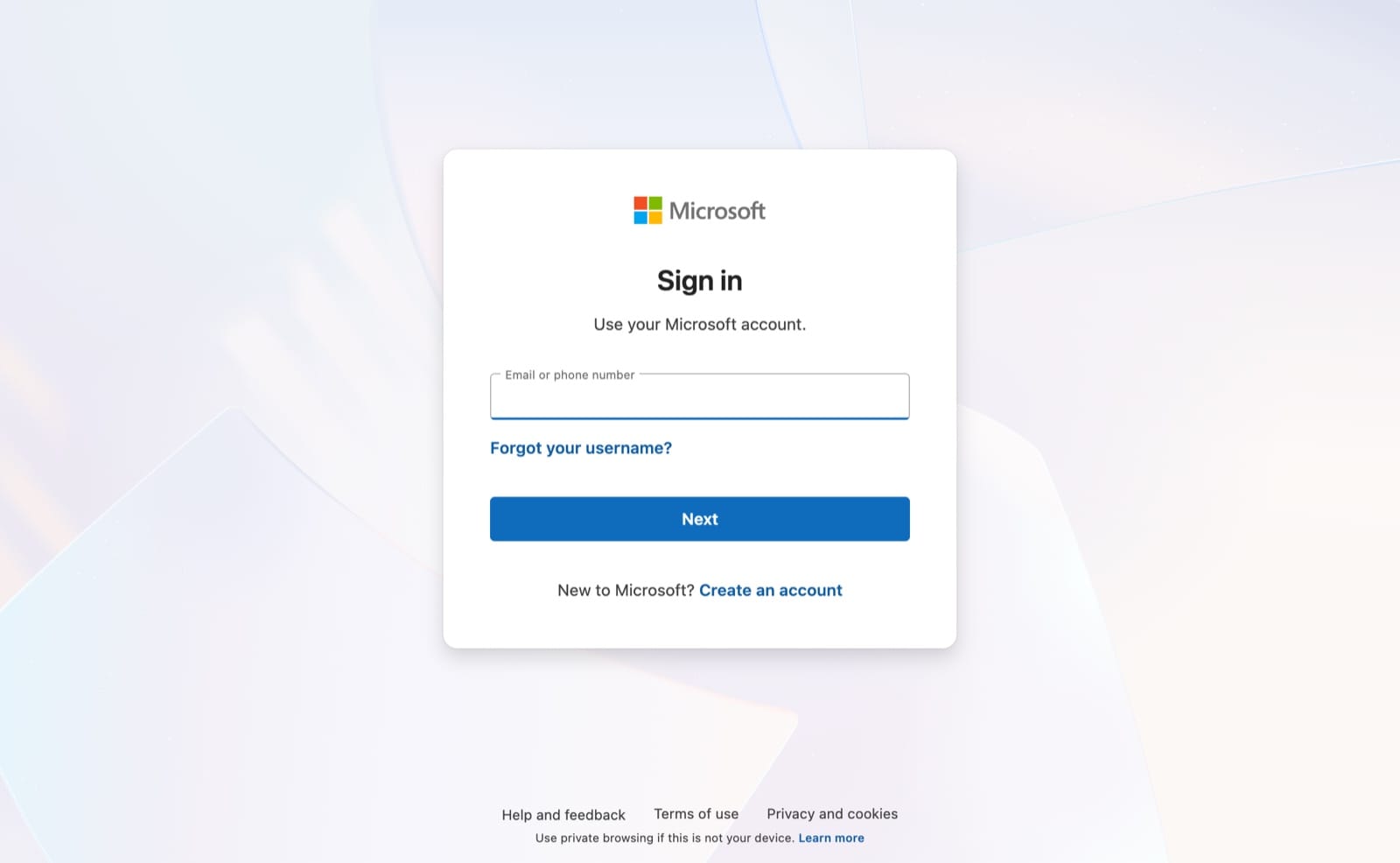
So any article still printing Skype's per-minute prices is quoting a cached figure from before the shutdown and presenting it as though it were current. We left those numbers out, because we couldn't check them.
Work out which half of Skype you actually used
Free calls between Skype users. Easy. WhatsApp, FaceTime, Messenger, Google Meet, Zoom. Take whichever one the person at the other end already has installed, since they're close enough to identical for a weekly catch-up that arguing about which is best wastes an afternoon. This half of the problem is solved.
Skype Out, the paid calls to real phone numbers. This is the hard one. It's what you used to reach a landline, a mobile belonging to someone who has never installed WhatsApp, a customer service line with eight menu options, a hotel in a country you're flying to next week, a doctor's receptionist. Whoever you're ringing needs no app, no account and no internet connection, because the call arrives on their ordinary phone exactly as it would from any other phone. They just answer.
If you're in the second group you need a service that dials the public phone network. Most free apps don't. That single fact disqualifies most of the "best Skype alternative" lists you'll find, because they're really lists of video conferencing tools, written by people who never used Skype to phone anyone.
How the real options compare
| Service | Monthly fee | Dials any phone number | Works in a browser | Credit expires |
|---|---|---|---|---|
| CallTuv | None | Yes, 232 destinations | Yes, plus iOS and Android | Never |
| Yolla | None | Yes, 190+ countries | No, app only | Not published on the rates page |
| Viber Out | Optional monthly plans | Yes | No, app only | Not published on the rates page |
| Microsoft Teams Phone | $10.00 per user, calling extra | Only with an added calling plan | Yes | Subscription, not credit |
| Google Voice | $10.00 per user | US numbers | Yes | Subscription, not credit |
| Free | No, app to app only | Yes | Not applicable | |
| Skype | Closed | No | No | Service ended |
What we charge, and where you can check it
Every destination gets two published figures, a landline rate and a mobile rate, across all 232 places you can call. For the United Kingdom that's $0.04 and $0.07 a minute.
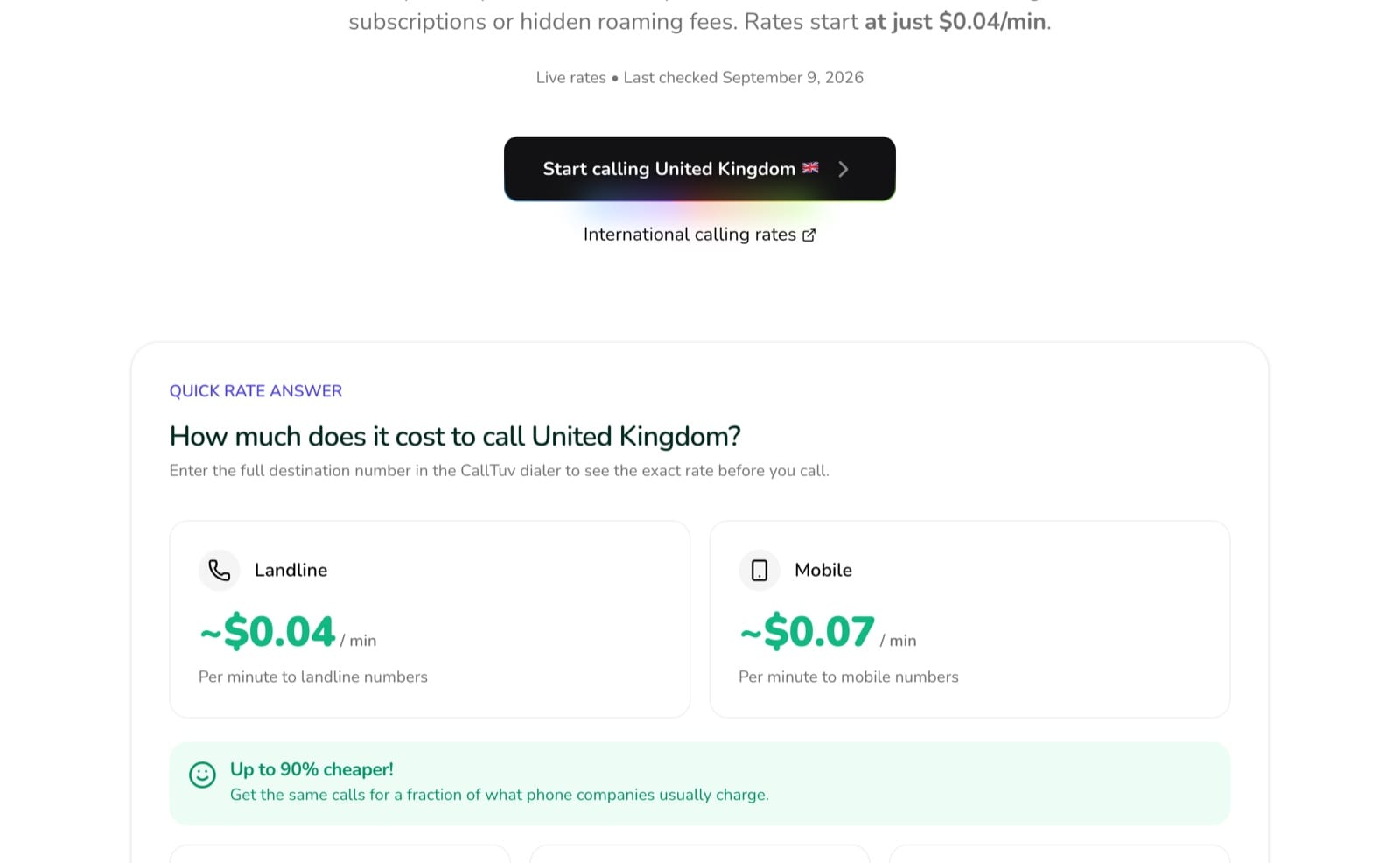
Rates start at $0.03 a minute for the United States and Canada. Some destinations are genuinely expensive and we print the real number instead of hiding it behind a "from". The whole card is public at calltuv.com/en/rates, and there's a plain text version if you'd rather check it with a script than trust a marketing page.
Two things that matter more than they sound:
- Credit never expires. Call twice a year and the balance is still there. Nothing is charged in the months you don't dial.
- The minimum top-up is $5. You can test the call quality for the price of a coffee, and calls are billed rounded up to the whole minute.
The subscription trap
Most of the services being recommended as Skype replacements bill you monthly whether you call or not, which is precisely backwards for the way most people used Skype Out.
Teams Phone Standard runs $10.00 per user per month on an annual subscription, a separate Teams licence is required on top of that, and the $10 still doesn't include the actual calling, because Microsoft's own page tells you to add PSTN service through a Calling Plan, Operator Connect or Direct Routing. A $13.00 tier bundles pay-as-you-go calling for the US zone. Per user. Per month.
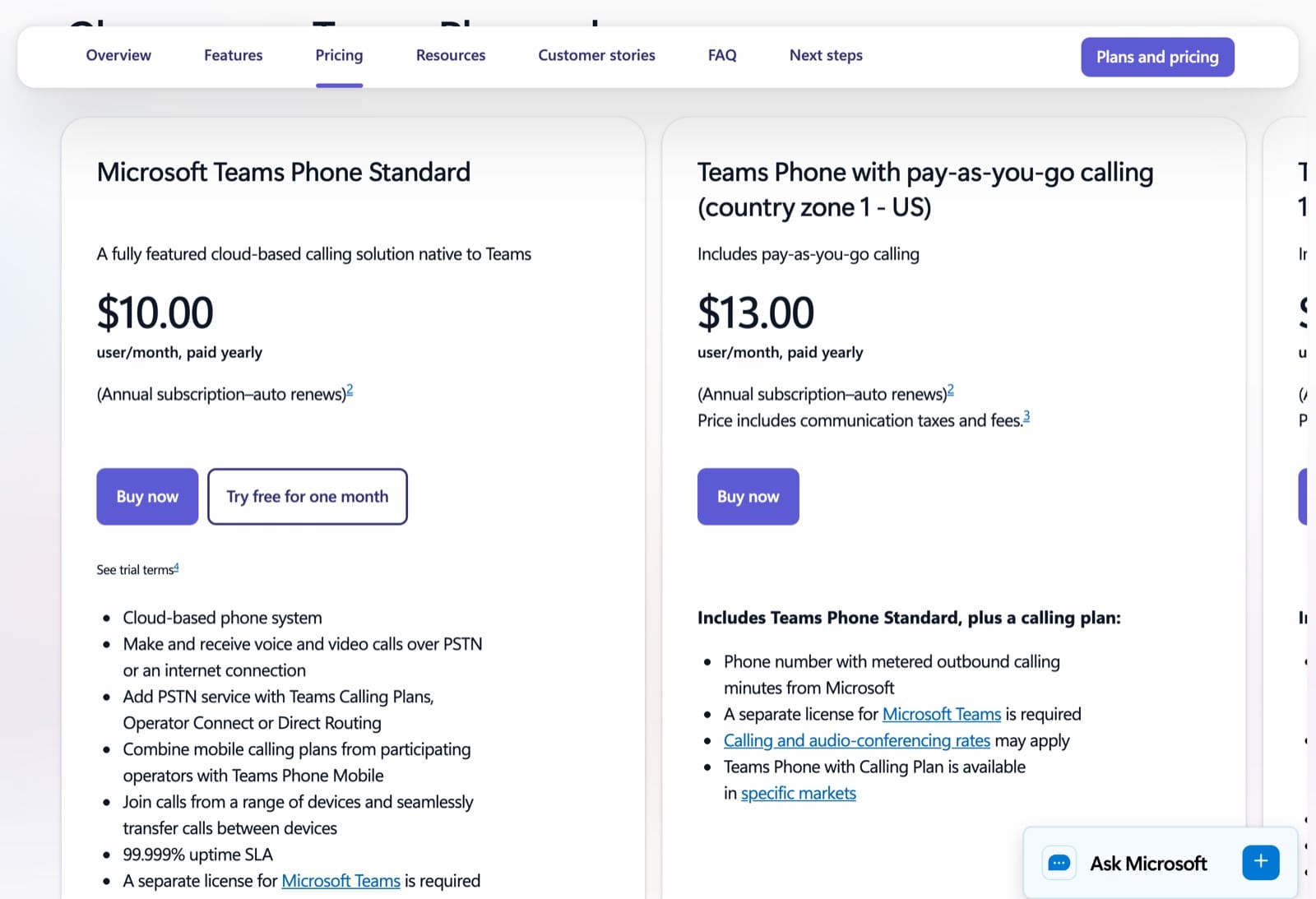
Google Voice starts at $10.00 per user per month too, and its free tier only calls US numbers from inside the US.
Viber Out sells optional monthly plans alongside its credit, and it's app only, so there's no browser to fall back on when your phone is flat or you're working at a desk.
For somebody who rang a landline abroad once a week, a per-seat subscription is a business phone system sold by the seat. Not overpriced. Just built for a completely different buyer.
Ten minutes of calls to a UK landline costs forty cents on CallTuv. A $10 monthly seat costs $120 a year whether you pick up the phone or not.
The closest rival on the same model
Yolla runs the same pay-as-you-go idea we do and covers 190+ countries, which makes it the one service here that a Skype Out refugee would recognise immediately as the same shape of product. Its United Kingdom page prices landlines from $0.06 a minute and mobiles from $0.10.
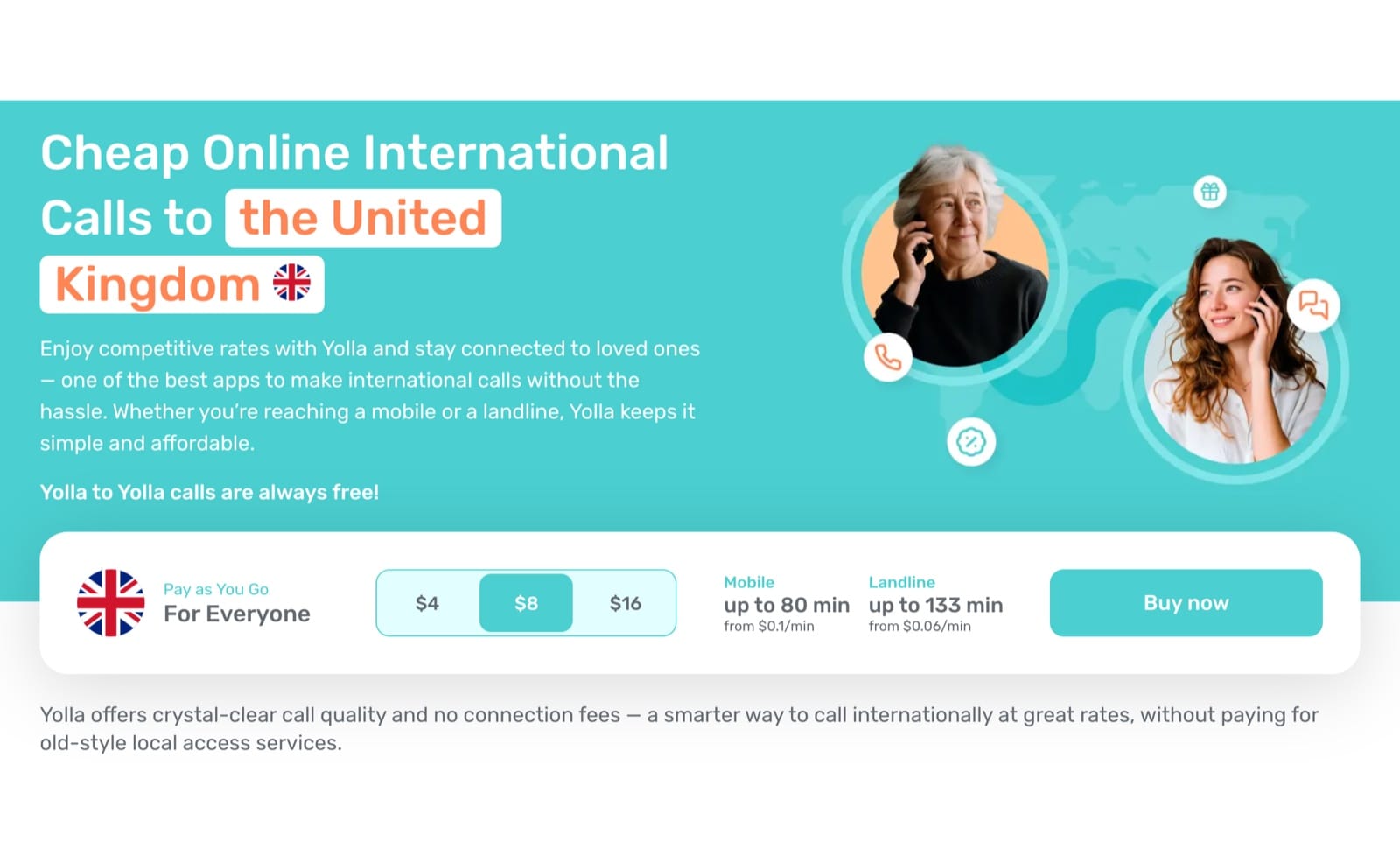
Against our $0.04 and $0.07, that's a third more for a landline and roughly 40% more for a mobile, on a service that has no browser version. Other destinations will land differently. Check yours.
Why the free apps can't do this
Free calling apps only work when both people are on the same app.
Your aunt in rural Sicily doesn't have WhatsApp. The airline's customer service line doesn't answer on FaceTime. The embassy doesn't take calls through Messenger.
Anyone ringing businesses, government offices, landlines or people without smartphones needs a service that dials a real phone number, the same ten or eleven digits you'd punch into an ordinary handset. The person on the other end needs no account and no app, and often no internet at all.
Getting through automated menus
This is a real dividing line and it deserves its own section, because it's where a lot of international calls quietly fail.
Phone menus listen for the tones your keypad sends. Some apps play your key press as a sound down the line and hope the system at the far end hears it correctly, which falls apart on an imperfect connection. We don't do that. Each key press is sent as its own separate signal alongside the audio, with the pacing handled automatically, which is why presses tend to land first time even when the line is poor.
If you've ever hammered "1" at an airline's menu and had nothing happen, the detail is in how key presses actually work, and there's more in our comparison with Viber Out.
Moving over
There's nothing to migrate. Skype's call history sat on Microsoft's servers, and none of it moves anywhere.
- Turn off any Skype auto-recharge still attached to your Microsoft account, if you haven't already.
- Open calltuv.com in a browser, or install the iOS or Android app. Same account either way, same balance across all three.
- Sign up with email or Google. About thirty seconds.
- Add $5. You'll see the per-minute rate for the destination before you dial.
- Dial the full number, country code included. It rings their ordinary phone.
If you had Skype Credit sitting unused when the service closed, that's a separate question and we wrote it up in what happened to Skype Credit.
How we checked
Every figure here came from the provider's own public page on 9 September 2026, screenshotted at the time so you can see the source for yourself. Our own numbers come from the published rate card, which lists a landline and a mobile rate for all 232 destinations.
What we did not do: quote Skype's historic rates, because they're no longer published anywhere we can verify; rank call quality, because we can't measure that fairly on our own product; or claim a competitor lacks a feature unless their own documentation says so.
Prices move. If you're reading this long after September 2026, open the live pages before you decide anything. Reuse of this comparison is welcome with attribution and a link.
Frequently asked questions
What is the best Skype alternative for calling real phone numbers?
For replacing Skype Out specifically, CallTuv is the closest like-for-like swap. It dials any landline or mobile in 232 destinations, charges per minute with no subscription, keeps credit that never expires, and runs in a browser as well as on iOS and Android with one shared balance. Yolla is the same model priced higher on the routes we checked, and Viber Out is app only with optional monthly plans.
Can Microsoft Teams replace Skype for calling landlines?
Only if you buy Teams Phone, which is $10.00 per user per month on an annual subscription, requires a separate Teams licence, and still needs a calling plan added before it can dial the public phone network. Teams Free does not call phone numbers at all.
Is there a free Skype alternative for calling landlines?
Not really. Google Voice gives free calls to US numbers from inside the US, which is the closest thing that exists. Everything that dials international landlines and mobiles charges for it, per minute or by subscription, because somebody has to pay the network at the far end.
Can I use WhatsApp instead of Skype?
Only for calling people who also have WhatsApp. It cannot dial a landline, a business line, a government office, or anyone without the app. That's the single biggest gap between free calling apps and what Skype Out did.
What did Skype charge per minute?
Skype's rate pages are no longer public. Its United Kingdom rate URL now redirects to a Teams meetings page and the general calling-rates page demands a Microsoft sign-in, so any article quoting current Skype prices is repeating a figure from before the May 2025 shutdown.
Do CallTuv credits expire?
No. Credit sits on the balance until you spend it. That's the main reason infrequent callers land on pay-as-you-go instead of a monthly seat.
Can I keep my Skype number?
A Skype Number was a Microsoft product and it ended with the service. CallTuv is outbound calling only and doesn't sell phone numbers, so if you need a number people can ring you on, you need a different kind of provider.